Choreographing Resistance: The Subversive Evolution and Political Geography of Flamenco Folklore
Flamenco is not a tourist commodity. It is an archive of survival.
Welcome to a digital exploration of flamenco as a living, breathing archive of cultural survival.
Today, flamenco as we know it is often sanitized for global tourism to be sold as a romantic commodity. It is usually looked at as nothing more than a passive stage performance. The objective of this website is to strip away this commercial veneer by using a folklore lens to examine flamenco as the disruptive and resilient socio-political force that was born through the marginalized communities in Southern Spain.
The anatomy of flamenco:
To grasp how flamenco became a tool for political protest, one must first understand its structural anatomy. Flamenco as a performance is not a solo act but rather a tripartite conversation that is deeply rooted in oral tradition and shared community experience.
Pillar #1:
El Cante (The Song): This is the narrative and emotional foundation of flamenco. It is the heart and oldest element of the tradition born from communal grief, displacement and persecution. The cante is the structural rhythm of the entire performance.
Pillar #2:
El Baile (The Dance): Baile is the physical extension of the song and shifts from themes of internal sorrow to external defiance. The dance relies on explosive zapateado (explosive foot work) and fluid braceo (arm movements) to command and reclaim space.
Pillar #3:
El Toque (The Guitar): Originally, the guitar was used only as rhythmic support for the singer but evolved into a harmonic anchor that provides the tension, release, and driving momentum behind the performance.
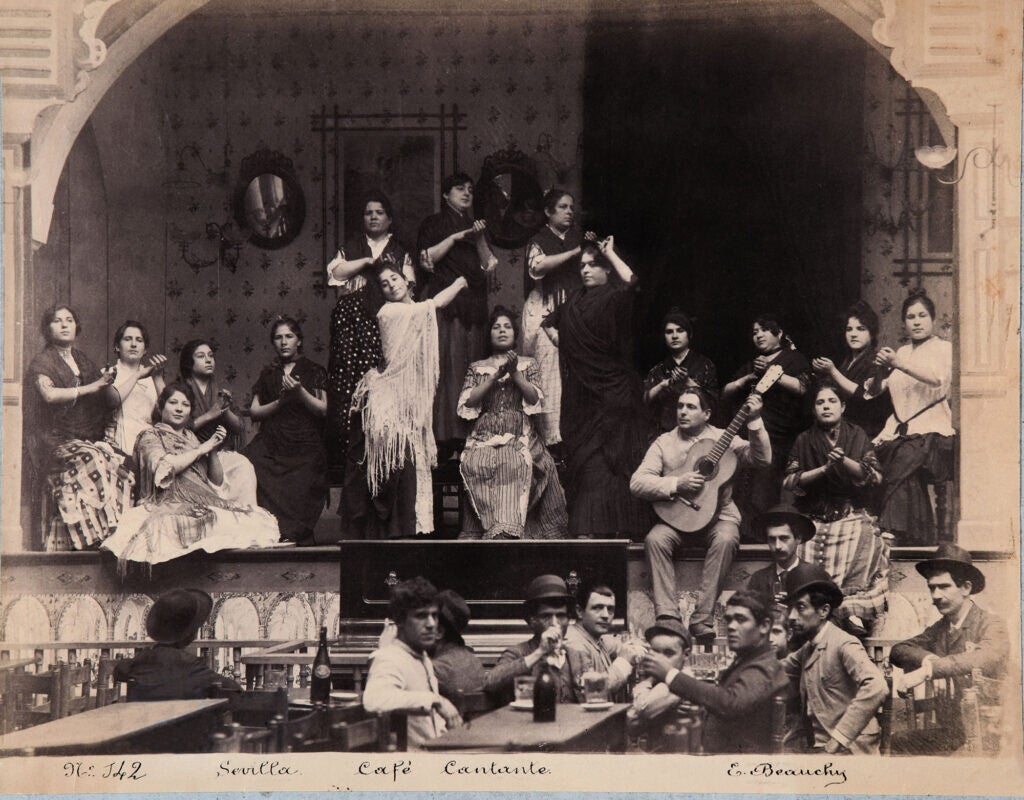
Notice the differences here between this more traditional performance:
Versus a more commercialized performance:
Theoretical Framework:
To get a better understanding of how flamenco operates as an outlet for protest and political warfare, we must look at it through the lens of the current academic folklore theory. In their foundational text, Living Folklore, scholars Martha Sims and Martine Stephens define folklore as "informally learned, unofficial knowledge... expressed creatively through words, music, customs, and behaviors" (2011, 8). Through this definition we can gauge that flamenco is more that a static tourist commodity but rather acts as a "dynamic, interactive performance process" (Sims and Stephens 2011, 127). Rather than just a passive museum piece, it a living process that is in constant motion through marginalized groups that actively challenge current contemporary structures of power.
Traditional Lyrics:
"Por los rincones me siento / a llorar mi desventura..."
(In the corners I sit / to weep over my misfortune...)
Traditional cante (song) lyrics like this traditional martinete-famously captured in early recordings like Manuel Torres open-archive performance ("Siempre por los rincones" 1922) -were historically sung unaccompanied by Gitano blacksmiths, using a physical anvil to strike the rhythm. This musical tradition captures an informal, oral history of systemic oppression and economic survival that was entirely ignored by the official records of the Spanish Crown (Cisneros-Kostic 2010, 42).
Create Your Own Website With Webador