Geographies of Resistance:
Triana Displacement and Urban Isolation:
Fast forwarding to the 20th century during the Franco dictatorship in Spain (1939–1975), the multi-ethnic populations of Afro-Iberians and Roma (Gitanos) resided in the neighborhood of Triana, located in the western part of the city of Seville (shown in red on the right here). Triana is best described as one of the cradles of flamenco due to its local variations of cante jondo (deep song) such as soleares, tonás, and martinetes (as seen on the page before). During the 20th century, the neighborhood experienced many changes due to repeated flooding in the 1950s and 1960s, as well as the implementation of new urban policies during the second half of Francisco Franco's dictatorship. Following the flooding in November 1961, a tributary of the Guadalquivir River blew open through a wall, impacting large parts of Seville; this event led to the displacement of the people living in Triana due to Franco's accelerated process of segregated urban planning under the guise of disaster relief. Here is where we see forced displacement, as the inhabitants of Triana were first relocated to temporary shelters and eventually to state-sponsored housing located on the outskirts of the city, known as polígonos de viviendas.
Flooding:
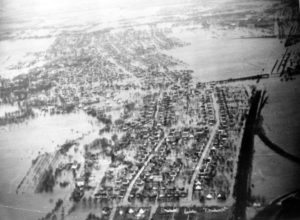
These urban shifts had a huge impact on the art form of flamenco and threatened its survival. Many artists within Triana were no longer able to practice flamenco as a part of everyday life because they lacked access to the communal patios that had facilitated spontaneous musical gatherings. In contrast, the polígonos presented far fewer opportunities for musical culture due to the inhospitality associated with these sponsored houses, leading to the suppression of flamenco within these new residential zones.

However, the spatial fragmentation of the community also led to a distinct geography of resistance. Carlos van Tongeren (2023) argues that flamenco dance and song in this area evolved into tools of embodied memory that served as both a coping mechanism and a form of resistance toward state-sponsored urban displacement. Forced from their neighborhoods, Gitano artists transformed their own bodies into primary sites of geographic preservation. These performers utilized the physical gestures of flamenco dance as an archive of the trauma of displacement, as well as a visual reconstruction of the lost spaces of Triana (Van Tongeren 2023). The community refused to succumb to the regime's attempts to commodify flamenco into a sanitized symbol of Spanish nationalism—a concept known as nacionalflamenquismo (Goldbach 2014). Instead, they utilized the raw emotion and expression of cante jondo to voice collective grief and political defiance. Ultimately, even in the face of structural exclusion pushed by the Francoist regime, the Gitano community used the performance of flamenco to reclaim power and ensure that the history of Triana would survive.
Reality:
Franco Propaganda Tourism Poster:


Explore more on how flamenco, through Franco's fascist regime, became apart of Spain's national identity here:
Create Your Own Website With Webador